
Have you ever stopped to wonder what happens to foul waste when you flush the toilet? The chances are you probably haven’t, but in the UK there are various different ways in which waste water is taken from the home and processed. In this June 2026 edition of the Suddenstrike Drain Care blog, we will be looking at different types of foul drainage systems and which one is right for you and how Suddenstrike Drain Care can assist you from choosing the right system through to installation.
The majority of properties in the UK are on a mains sewerage system, where each property is connected to the main sewer system with the waste then carried to the nearest sewage treatment plant, run by your area’s water authority – for Cheshire, this is United Utilities. However, especially in rural settings, mains drainage is just not an option as the mains sewerage pipework is not available to connect in to. In this instance, suitable treatment technologies are required to dispose and manage the waste whilst meeting local regulations and environmental requirements.
Off mains waste water treatment solutions
If a connection to a mains system isn’t possible then there are several options available –
Cesspools
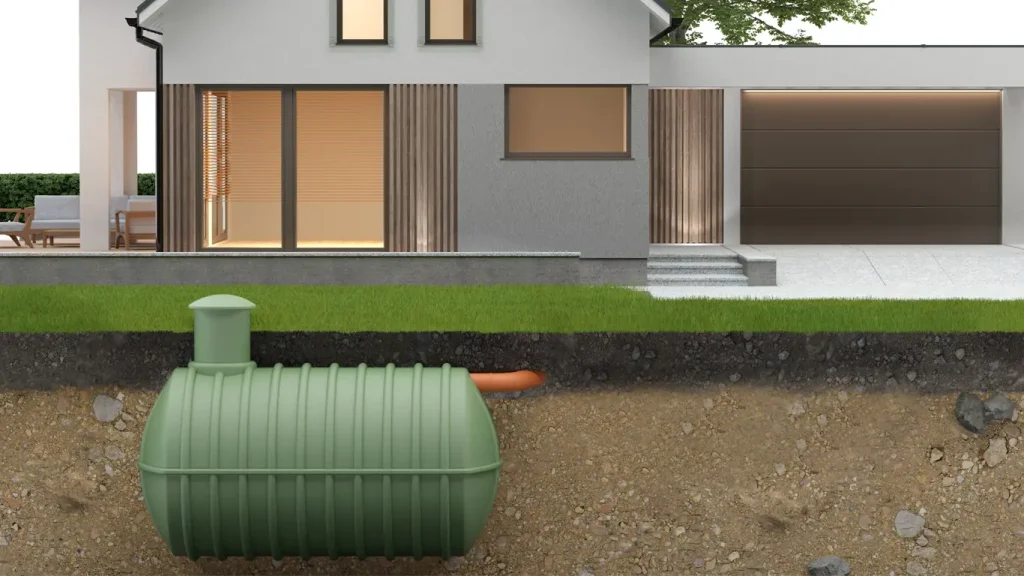
A cesspool or cess pit is a sealed underground tank that is used to temporarily store waste until it is collected and disposed of by a licenced waste carrier. While simple to maintain, because there is no treatment of the waste or outlet, for treated waste to disperse, they require emptying frequently.
These tanks are installed underground with a single inlet connection from the property to the tank; there is no outlet for effluent to drain out from and no treatment of the waste water. To comply with relevant regulations, there is also a vent pipe connected to the tank.
With the introduction of the General Binding Rules in 2020, Cesspools are still legal in the England as they are a storage tank for foul waste and as long as they are maintained and meet the relevant standards, they do not pose a pollution risk as there is no outlet from the tank.
As a guide, your cesspool should have a minimum capacity of 18,000 litres per two users and an additional 6,800 litres for every user after that. The tank will require emptying on a regular basis; however, this will be determined by the amount of persons living in the property to which the cesspool is connected and the amount of waste produced.
At Suddenstrike Drain Care, we can advise you on the pro’s and con’s of a cesspool system as well as undertaking the installation of cesspools. For more details on how we can help with cess pool installation, please contact us today on 01270 619147 or complete our contact us form for a callback.
Septic Tanks
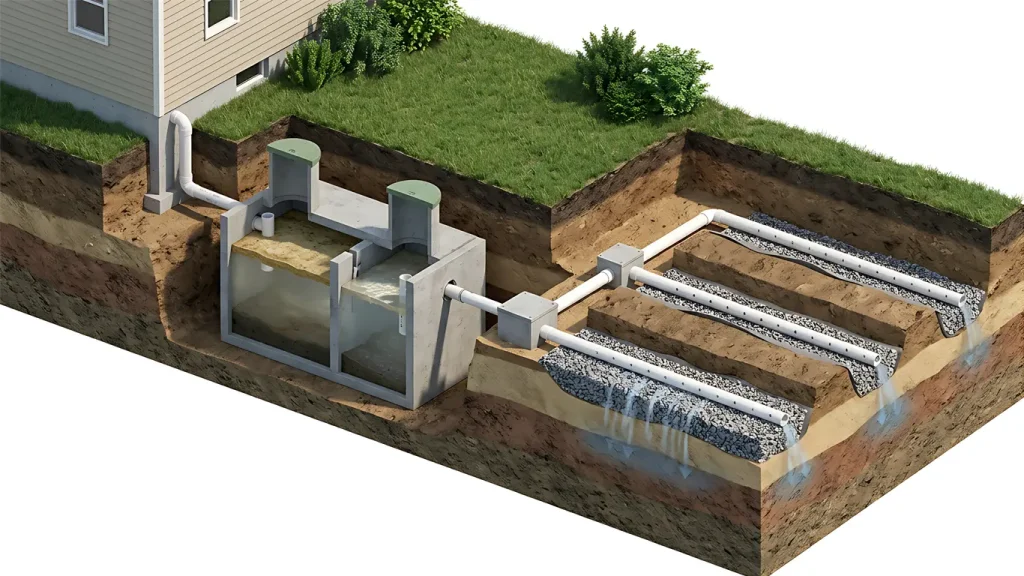
Where a cesspool is often a single chamber with an inlet, but no outlet, Septic Tanks are typically constructed with several chambers with baffles that retain the suspended solids in the first chamber, allowing effluent to flow in to a second and sometimes third chamber for additional separation before the effluent is passed out through an outlet to a drainage field. Whilst this often meets basic discharge standards, septic tanks can only discharge either to a drainage field to ground, with the effluent quality still relatively poor.
Whilst it is still legal in England to operate a septic tank system and to install a new septic tank system, from the 01st of January 2020, the General Binding Rules, prohibit septic tanks from discharging directly in to a surface water source such as a stream, river or ditch as this type of discharge poses a risk to public health and the wider environment. In order to comply with the General Binding Rules, septic tank operators who discharge to a water course must either
- Replace or upgrade the septic tank with a sewage treatment plant, compliant with the stated British Standards (currently BS EN 12566-3);
- Divert the septic tank discharge to a drainage field (complaint with BS 6297:2007);
- Connect to the mains sewage network.
Suddenstrike Drain Care can help you design and to install a new septic tank system compliant with the current General Binding Rules or help you bring your existing system up to standard. For further information on how we can assist, please telephone us on 01270 619147 or request a call back through our contact form.
Sewage Treatment Plants
Modern sewage treatment plants are designed to treat household wastewater to a much higher standard than a traditional septic tank, producing a higher quality, less pollutant effluent. Once the effluent has passed through the sewage treatment plant, it can then be dispersed through a drainage field to ground or to a running water course.
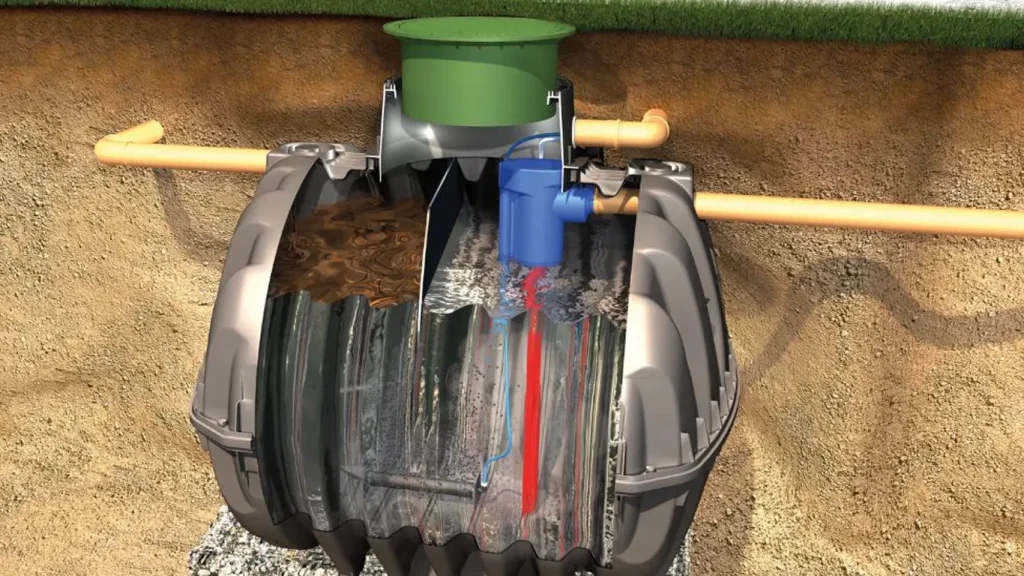
Suddenstrike Drain Care are installers of Graf UK sewage treatment plants. Graf UK’s range of One2Clean systems are market leaders for water treatment quality from their sewage treatment plants. The treatment plants work in the following stages –
- Wastewater treatment: Wastewater arrives directly in the biological zone without the need for pumping processes. Aeration of the entire container leads to immediate wastewater activation. The microorganisms begin the biological cleaning process without delay.
- Settling phase: Aeration is interrupted by the control unit, the activated sludge sinks to the bottom. A clear water zone develops in the upper part of the container.
- Clear water extraction: The treated clear water is extracted from the system and the cleaning process can begin once more.
Modern domestic waste treatment plants area a sustainable, low-maintenance solution compared to traditional septic tanks and cesspools, with ultra-low power use, a far superior treatment quality, quiet operation, cost efficient design and with optional modules available for areas of the country where nutrient neutrality is required for effluent from a domestic waste system.
Suddenstrike Drain Care installs many Sewage Treatment Plants and drainage fields each year, we can help you from start to finish with the initial tests to determine the sizes required, through to full installation and commissioning of the systems. To find out how we can help you bring your existing system up to date to meet the General Binding Rules or for information on the installation of a new system, please call us today on 01270 619147 or complete our contact us form. For additional information, please visit our Sewage Treatment Plant and Septic Tank page.
Which system is right for me?
When selecting an off mains foul waste system, there are several factors that need to be considered to ensure that the system selected meets both your needs and complies with national and local regulations:
- Property size and type: The size of the tank and accompanying drainage field is determined by the expected volume of foul waste from your property, this is so that the system works efficiently and complies with regulations governing small sewage discharges. This is calculated using the number of bedrooms in a property to give a ‘maximum’ population at any one time.
- Location: The location of the property will determine the regulations that need to be adhered to such as proximity to a groundwater source, soil type, land available for a drainage field, proximity to water courses and proximity to a mains sewage network – if your property is within 30m of a mains foul sewer you will generally be expected to connect to this.
- Financial: Whilst modern waste treatment plant systems may have a higher initial cost, they will often provide savings over the long term through increased efficiency and reduced maintenance needs.
- Regulations: All off mains foul systems, must meet the current General Binding Rules for Small Sewage Discharge, issued by the Environment Agency (more on this below). There may also be requirements for nutrient neutrality depending on your location and restrictions on how the waste must be discharged.
The General Binding Rules for Small Sewage Discharge
Introduced in 2020 and updated in 2023, the General Binding Rules for Small Sewage Discharge, require all off mains sewage systems in England to comply to a set minimum standard to protect public health, minimise pollution and to preserve the quality of surface water and ground water.
Additionally, home owners of all septic tanks and cesspools must ensure that their system met the British Standard at the time that they were installed, the current standards for new systems are:
- BS EN 12566 for septic tanks and small sewage treatment plants
- BS 6297:2007 for drainage fields
- If your treatment system was installed before 1983 you do not need to do anything to meet the British Standard as there was no British Standard in place before then; however, you must still meet the other general binding rules that apply to you.
Full details of the current General Binding Rules for Small Sewage Discharge can be found by following the links below to the GOV.uk website –
Discharge to ground: https://www.gov.uk/guidance/general-binding-rules-small-sewage-discharge-to-the-ground
Discharge to surface water: https://www.gov.uk/guidance/general-binding-rules-small-sewage-discharge-to-a-surface-water
In other news...
Smart electric fence energiser range from Suddenstrike Fencing
Suddenstrike Fencing Blog: May 2026 with Gallagher Power Fencing Suddenstrike Fencing are approved stockists for Gallagher Power Fence products. In this May 2026 edition of our Fencing blog, we discuss how a smart electric fence energiser can save time and help you maintain your electric fence lines. For full details on the range of fencing…
Reliable solar-powered grazing, all year round
Suddenstrike Fencing Blog: April 2026 with Gallagher Power Fencing Suddenstrike Fencing are approved stockists for Gallagher Power Fence products. In this April 2026 edition of our Fencing blog, we discuss how solar-powered energiser alternatives to traditional energisers are powering a shift away from heavy 12 or 9V powered energisers requiring regular recharging, providing users with…